How to Leverage Key Marketing Dates to Promote Diversity and Inclusion
Craft inclusive copy, content, and communications. Build your brand around bettering the world. It’s all here in the definitive guide to authentic inclusive marketing.

Why Authentic Inclusive Marketing is harder today.
A decade ago, pushing diversity and inclusion in your business might have been enough. No one was really asking you to, so the effort was valued. Today, even businesses who sincerely want to do their bit have to contend with accusations of band-wagoning, pandering and disengenuity.
As navigating the culture war and avoiding ‘cancel culture’ becomes a tightrope walk even for the well-intentioned, we’ve put together a guide on how to market inclusivity authentically.
The number one rule is timing, and that means leveraging Key Dates.
What Key Dates come under Diversity and Inclusion?
Key Dates can be any shared moments in the social calendar that draw attention, drive conversation, or direct behaviour, whether it’s an event, awareness day, observation, or celebration. In 2022 knowing these dates has become essential to getting the marketing edge. Key Dates in the diversity and inclusion calendar can include:
- Religious holidays such Ramadan, Holi Festival, or Mardi Gras
- Awareness Days that bring attention health, social, and cultural issues, such as gender discrimination or epilepsy.
- Anniversaries and historic moments like Rosa Parks Day or LGBT History Month.
How inclusive marketing can help promote diversity and inclusion.
‘Diversity and ‘Inclusion’ and ‘Inclusive Marketing’ are not the same thing. Nothing is a substitute for actually making your business more diverse and inclusive in its employment and practices.
That said, in the social media age, tailoring your communications to more diverse audiences, using your platform to spread the cause, and sharing your progress and commitments can all go a long way. So how do you do all this without implicating yourself in charges of ‘virtue signalling’ or ‘fake corporate activism’?…
Why a D&I Calendar is integral to an authentic inclusive Marketing Strategy.
A lot can go into planning an effective inclusive marketing strategy, all of which we cover here, but it’s integrating this plan with the D&I calendar can make or break its execution – the day for diversity and inclusion may be every day, but hitting key dates gives your contributions a natural timing that enhances authenticity and outreach.
With inclusive content, whether it’s a social media post, ad campaign, partnership, promotion, or initiative – nailing the timing can put you at the heart of the conversation as it’s happening, amplifying your reach.
And when it comes to authenticity, hitting the right dates shows you’ve taken the time and done your research, so you’re not just making throwaway contributions. It keeps posts trendy and topical, and avoiding those awkward ‘right place, wrong time’ moments.
Most of all, leveraging key dates gives your contributions a reason for being, you’re not just up on your soapbox boasting or harassing people about D&I, you’re participating in a shared moment.
When planning your inclusive marketing strategy, key D&I dates and awareness days can also provide inspiration and allow scope for variation. Leveraging related days are good way to keep things interesting, and stop you sounding like a broken record.
Which are the most Important Key Dates in the D&I calendar.
No one aspect of diversity and inclusion is more important than another, but in the D&I calendar, lots of dates and causes overlap and knowing which is which can make a big difference to your impact. For marketing’s sake, it’s good to know, for example, whether ‘International Day of Transgender Visibility’ or ‘Day of Silence’ is more relevant to you, or whether one is more widely observed.
With all this in mind, let’s see how to take your inclusive marketing to the next level…
Specialising is the first step to an Authentic Inclusive Marketing Strategy.
Why specialising is crucial to an authentic Inclusive Marketing Strategy.
If you’re ahead of the game on D&I then sharing that with followers is easy enough, but the likelihood is you’ll have some areas of weakness. That’s okay, actions may speak louder than words, but sometimes you can turn your words into action.
Lending support, being a vocal proponent and raising awareness is all vital to the diversity and inclusion cause. Yet with the proliferation of social causes and the saturation of the industry with topics ranging from health to social justice, staying on top of everything is no longer a viable strategy.
Identifying a link
To push diversity and inclusion authentically, you’ll need to be selective about themes or subjects, and focus on just a few. This doesn’t mean valuing one cause over another. It’s that consumers want to see evidence of a clear link between brands and what they talk about, or else it’ll just look like you’re paying lip-service.
Whether it’s related to your industry, employees, or audience; your brand should hone in on a particular issue they can get behind and then leverage related dates throughout the year.
This could be anything from neurodiversity to black lives, so long as you can show a clear connection (i.e., it’s what your customers care most about, its close to your staff members, its a particular problem facing your industry etc.). From here, you can begin to build your brand around this specialism…

Building Brand Identity around Inclusive Marketing Content is the key to being Authentic.
What makes specialised content more authentic when it comes to diversity and inclusion.
Once you’ve selected an area of diversity and inclusion, you can begin to integrate this with your brand identity via social media. By making consistent interventions on the topic, you can become an advocacy voice, in a way that is visibly more authentic, and really is more effective. This way, you avoid criticism of simply riding the wave, and your brand really can do more for a specific cause.
Brands interventions into matters of diversity and inclusion often seem superficial because they are. That doesn’t mean they don’t truly care, but with such a range of issues, in such a fast-paced environment, doing the proper research is difficult.
By specialising, you can develop your expertise in the field, making your content more informative and educational (a proven way to drive engagement). You won’t just be repeating the same one liners thrown out by other brands, and you can begin to build trust as an authority on matters within the corporate space.
Choosing a niche and remaining consistent safeguards you against the all-too-common inference that your silence is somehow indicative of your position. You can avoid controversy by sending a clear message that, whilst you may be supporting of other causes, you prioritise engaging in that area which you’ve developed your expertise.
And of course, once you’ve specialised, you can use the D&I calendar to hit key dates throughout the year. Integrating with the D&I calendar provides a template your campaign schedule that stops you sounding like a broken record, making sure interventions are timely and appropriate.
The key to crafting Authentic Inclusive Communications: Minding your language
Why language matters in for Diversity and Inclusion
Again, when it comes to diversity and inclusion, actions do speak louder than words, but sometimes watching your words can be act of inclusion in itself.
We’re not talking about shouting over the rooftops about your commitment to diversity and inclusion. We’re talking about your everyday communications, whether that’s internal, advertising, content, or copy.
Inclusive communications means being wary of what you say and how you say it can affect those from diverse backgrounds. It could be as simple as using the term ‘partner’ in an email, and not assuming someone’s sexual orientation, or making sure the font on your site is suitable for the visually impaired. Down below we’ve included a checklist of some of the number one things you can do to make sure all your communications are inclusive.
Inclusive Communications Checklist
Here’s everything you need to be looking out for:
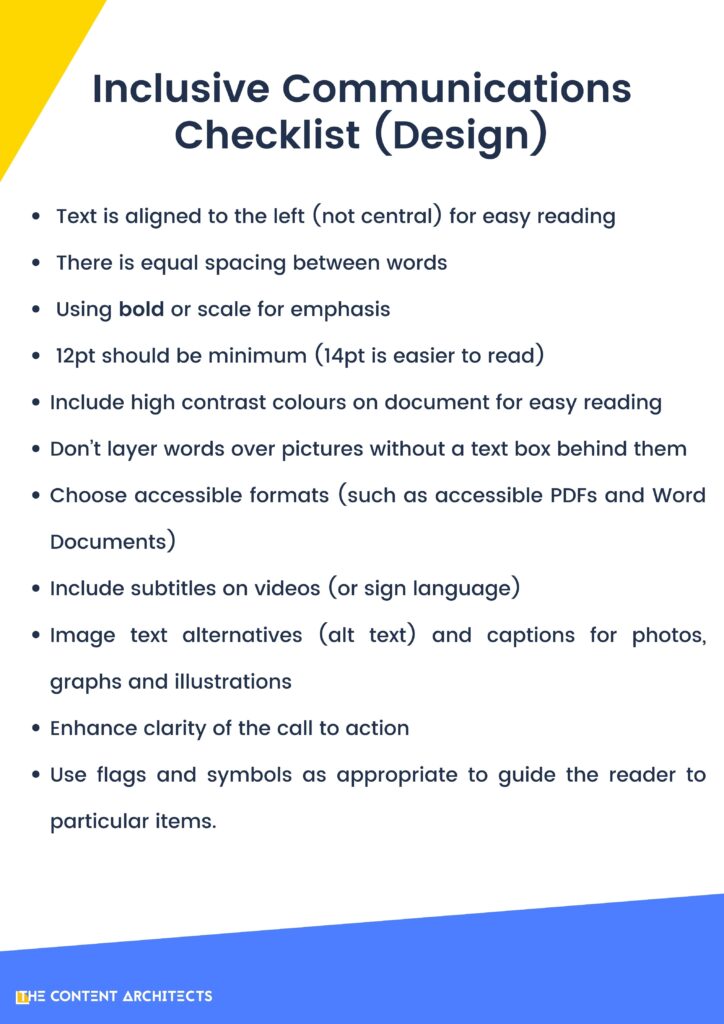
Checking this against your website, social media posts, etc. ensures you’re not unsuspectingly alienating anyone. Normalising this kind of mindfulness when it comes to language also creates a safer environment across the board for those encounter daily difficulties such as these.
With Inclusive Marketing, it’s not just your words you need to watch.
You don’t need to be a professional PR to know the power of storytelling, imagery, or ‘optics’ but with diversity and inclusion this rings especially true.
Un-Stereotyping Advertising has been a key push for many years now and involves considering the ways consumers are depicted in your ads. You might think avoiding stereotypes is easy, but our unconscious biases can come through in more subtle ways than you might expect.
Unilever have set three key checks for their advertisements which are a good starting point:
- Portray people in roles that relate to their aspirations and broader achievements rather than just their responsibilities.
- Show characters with personalities that feel authentic, distinctive, and characterful
- Represent diverse appearances and beauty in a way that is enjoyable, non-critical and a positive source of self-expression.
How to craft authentic content: with Humour and Humility.
When it comes to crafting Diversity and Inclusion marketing content on social media, it doesn’t always need to be solemn. Rather than detract from the seriousness of the topic, a bit of comedy can make posts feel more natural.
You don’t need to be a comedy genius to make this work, just a bit of humility. Being able to laugh at yourself is key. One of the clearest ways this is going to come is with the cold hard truth: your brand is mainly out to make money. Going ‘meta’, acknowledging this, and breaking the little taboo once or twice can work wonders.
And you can bring this back easily with another proven social media strategy technique: going behind the scenes. Yes, you are a brand trying to make money, but you’re also a brand made up of people like the rest of us. Lifting the veil, drawing the curtain, showing what it looks like around the office, and sharing some embarrassing moments is almost guaranteed to draw people in. If you’re strong on D&I already, this might even include some innocent ‘politically incorrect’ slip-ups; no one or group is infallible and being open about your mistakes and recognising them on a light-hearted level can show that you are genuine.
Few things were more cringe-inducing than Dove’s last campaign, which saw convention-shattering women, or the classic university prospectus trope. If your latest ‘un-stereotyped’ marketing includes every minority under-the-sun all smiling, laughing, and having fun – it’s okay to recognise that it can feel a little forced: caption the post with something like “Diversity: Check, suspiciously happy people: Check, racist Karen shooing them out of the park: Censored” – you get the gist. [Examples, i.e., Brooklyn 99 etc.]
All of this builds toward authenticity and familiarity, the key to your social media marketing strategy’s success.
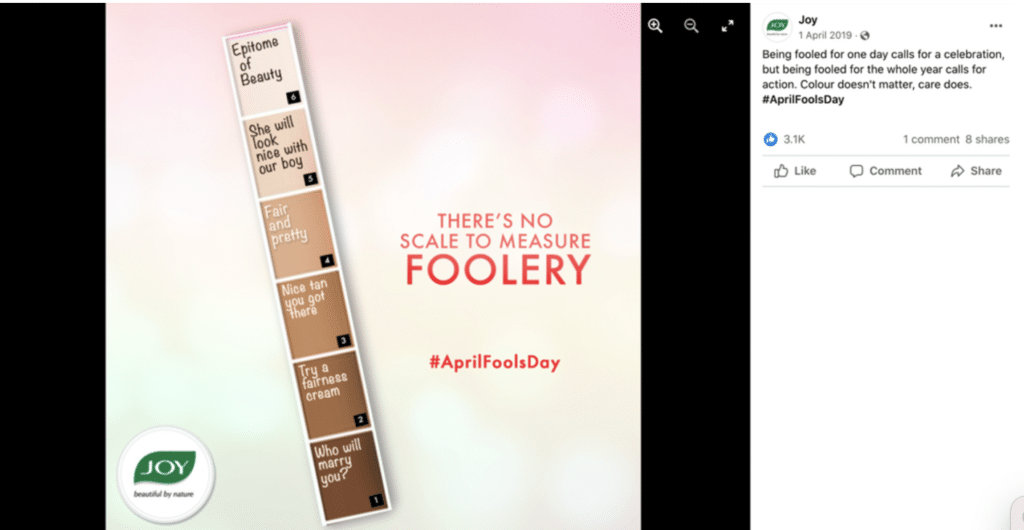
Adversarial Vs Consensus
Approaches to diversity and inclusion has become a contentious subject. The politics of this is not our concern here, but it is important to unpack what this means for your inclusive marketing content.
Picking a side and getting sassy online can win some serious points, but you do risk alienating a portion of your customer base. It’s easy to say that you’d rather not have their custom and being willing to put your money where your mouth is part of what makes this so effective. But grandstanding and moral superiority is partly what’s got us into this mess, and if we’re going to end systemic oppression, we need dialogue and mass support.
To not succumb to the manufactured outrage, to not allow ourselves to be divided and conquered, is an equally if not more effective way to promote D&I. D&I includes all those from disadvantaged backgrounds, regardless of race, gender, or sexual orientation, and is beneficial to everyone, even straight white males! There may always be people who oppose these kinds of efforts, but many have only come to these conclusions from their own lived experience and alienating them from the process can prove counterintuitive. You can still promote D&I without using contentious and triggering discourse such as ‘white privilege’ which, true or not, can put-off potential supporters.
With Inclusive Marketing, there’s no authenticity without real engagement.
Long-Term Partnerships, Community & Industry Engagement.
Companies have always sponsored or partnered with particular charities, but now the trick is to integrate the brand personality. Think of Product Red and their partnership with Apple, or Gillette and Football Beyond Borders, this is how you solidify your status as a key player in the game. AND MAKE AN IMPACT.
When it comes to activism and social causes, you can partner with local community organisations such as youth centres, larger movements like BLM, or social enterprises seeking to remedy the issues you’ve specialised in, such as Company Shop, for example. Just make sure it links up with your company values.
Depending on your level of responsibility within the business, it can be difficult to get a partnership like this actioned, but it will always make itself worthwhile.
Diversity & Conclusion
Whether you’re hitting those D&I targets or working towards them, this guide covers how to promote diversity and inclusion authentically, and how to make your marketing inclusive across your copy, communication and content. Specialise, build your brand around your specialism, leverage key dates related to it, cancel-proof your copy, partner-up, and you’re on your way to a truly effective inclusive marketing campaign.
Written by Rhys Skinner