How Your Business Can Take Part in World Oceans Day
The health of our oceans is integral to our own health. Discover what your brand can do to contribute to the campaign to protect and sustain our precious oceans.
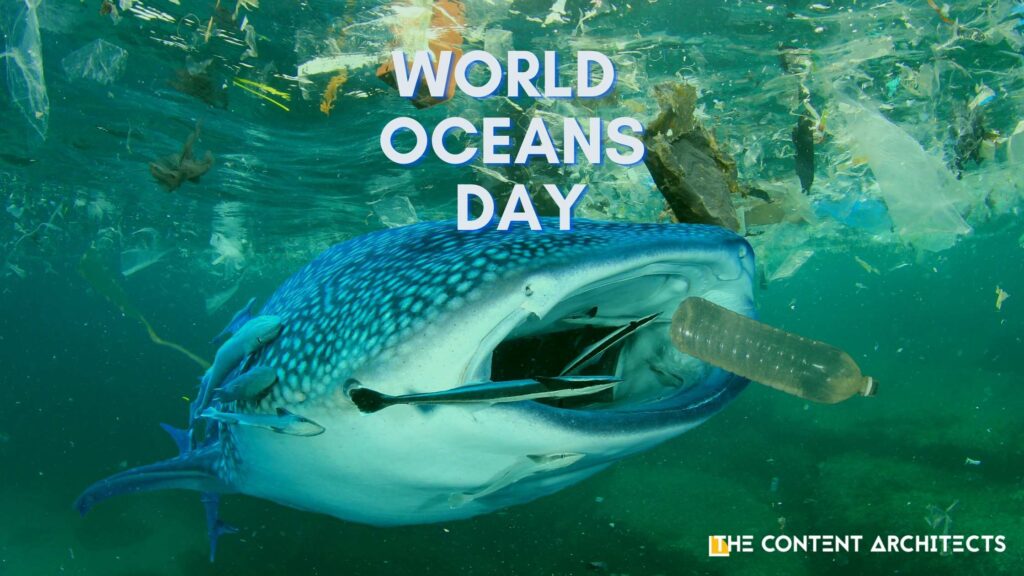
What is World Oceans Day, when is it, and should I add it to the marketing calendar?
On June 8th each year, people from across the globe celebrate the planet’s oceans and recognise the need to protect them. World Oceans Day is a key event on the conversation calendar, gaining a lot of attention each year. It aims to raise awareness of the crucial role oceans plays in sustaining all life forms and to inspire individuals, governments and companies to actively protect the ocean and use its finite resources sustainably.
World Oceans Day takes a different theme each year, with the 2025 celebration focusing on “Catalysing Action for Our Ocean & Climate”. It’s based on the idea that through transformative collaboration, we can grow the movement and create a healthy blue planet and a more just, equitable, and sustainable society.
Other themes over the years have included “Awaken New Depths” (2024), “Planet Ocean: Tides are Changing” (2023), “Revitalization: Collective Action for the Ocean” (2022), “The Ocean: Life and Livelihoods”(2021), “Innovation for a Sustainable Ocean” (2020), “Gender and the Ocean” (2019), and “Clean Our Ocean!” (2018).
Why are oceans so important?
Put simply, the health of the oceans is intrinsically linked to the health of every other life form on Earth, including the human race. Our oceans are of critical importance to maintaining life on our planet.
Oceans cover more than 70% of the planet’s surface, and contain 80% of life on Earth in all its fabulous biodiversity (National Geographic). Oceans are a source of food, medicine, sustainable energy, construction material, and even oxygen. In fact, according to the National Ocean Service, oceans could be providing as much as 80% of the oxygen we breathe, mostly due to the photosynthesis of oceanic plankton.
Oceans also play a crucial role in regulating our climate. The surface layer absorbs about half of the heat from the Sun that reaches the Earth, and distributes this heat across the globe. This means that oceans have a profound effect on the climate and weather patterns. What’s more, the oceans have acted as a buffer against climate change; as humans have increased the levels of carbon dioxide in the atmosphere, the oceans have absorbed about half of that carbon (WWF).
The state of the world’s oceans today
The world’s oceans are in dire straits. Year on year, human activity pushes the oceans and their inhabitants closer to the brink, whether those activities be unsustainable fishing practices, oil spills, or allowing tons of plastic and other waste to end up in the water. Over 460 million metric tonnes of plastic is produced every year, and at least 12 million tons of that makes its way into the ocean.

Frequently found marine litter includes food wrappers, drinks bottles, bottle tops, and plastic bags, with the most common form of marine litter being cigarette butts. Unfortunately for us, not only do cigarette butts leach toxic chemicals like arsenic into our environment, but also nearly all cigarette filters are made from plastic fibres. Therefore, like all plastic, they do not biodegrade and instead break down into thousands of microplastics.
A study conducted by Professor Boris Worm in 2006 resulted in the prediction that seafood would disappear by 2048. Worm stated, “In losing species, we lose the productivity and stability of entire ecosystems,” noting that species loss has far more severe impacts than simply a lack of seafood. Indeed, the damage caused by plastic, other pollutants and overfishing is catastrophic, and poses a huge threat to the ocean’s biodiversity. With a loss of biodiversity comes human health risks, depleting resources, disease outbreaks, and a loss of ecosystem services.
Significantly, Worm’s study also emphasised the possibility for reversing these losses, recovering species, and preventing further damage. Worm’s data showed that it was not too late. “We can turn this around,” he said, “but less than 1% of global ocean is effectively protected right now.” As of 2019, the Marine Conservation Institute stated that this figure is now 5.3%, but sustainability organisations are hoping to persuade world leaders to increase this to 30% of land and oceans by 2030. It’s still possible to save our oceans, but we need to act now.
How can my brand take part in World Ocean’s Day?
There are many things you can do as an individual and as a business to make a difference. Short-term, one-off events can help to boost the campaign and your brand’s image around World Oceans Day, but other commitments offer the potential to have a more long-lasting impact. Read on to find out five great ways to get involved, and check out the World Oceans’ Day website for useful resources.

1) LAUNCH A NEW COLLECTION, PRODUCT OR PACKAGING MADE FROM RECYCLED MATERIAL
One of the most popular and effective initiatives taken by many brands is the introduction of a new line of products made from recovered marine litter, especially recycled plastic waste. Adidas, for example, teamed up with Parley for the Oceans to produce the world’s first shoe upper-made entirely from recycled ocean plastic and recovered illegal deep-sea gillnets. Similarly, hosiery company Wolford produced a new hosiery collection made from fishing nets and other nylon waste retrieved from oceans and landfills. The sustainable handbag and accessory brand Bottletop, meanwhile, launched the Life Below Water band as part of their #TOGETHERBAND campaign. Made from recycled ocean plastic and up-cycled illegal firearms, 100% of the proceeds from these bracelets go towards funding projects dedicated to ocean and marine resource conservation.
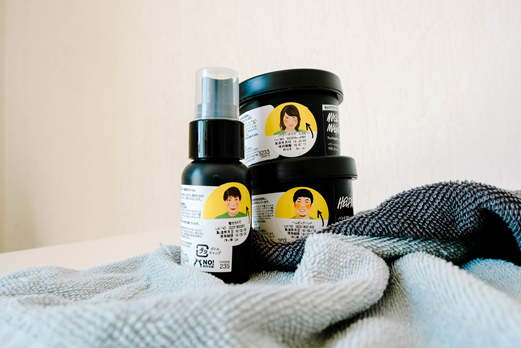
This initiative works particularly well for fashion brands, but recycled materials can be put to good use in many different industries. Cosmetics brand Lush, for example, have a scheme in place whereby customers are encouraged to bring their Lush product containers into stores in return for 50 pence/cents off their shop. The already-recycled plastic pots are then recycled again and used to contain future products, benefitting Lush, customers and the environment.
2) Organise, host and encourage clean-ups
In an effort to inspire their customers to get involved in coastal and river clean-ups across the world, Stella McCartney gave away their recycled and recyclable Trashion Bags for free, to be used to collect marine debris. Stella McCartney also partnered with local charity Thames21, and organised a clean-up of the River Thames with their London-based employees. Meanwhile, the outdoors brand United By Blue have made a more long-term commitment; for every product sold, they remove one pound of litter from oceans and waterways through company organised and hosted clean-ups.
Clean-ups are a great way to bring your employees, customers and community together, and they are relatively simple to plan. Not only can they be a lot of fun, but they can have a great impact on local areas, and help to raise awareness.
3) Support research and partner with experts for your campaigns
The key to coming up with sustainable solutions to our needs is research. The more we know, the more we will be able to innovate, restore habitats and species, and transform harmful practices for the better.
The simplest way to support research and conservation projects is to donate to them. Bakoto, a company that makes swimwear from 100% recycled plastic waste, does exactly this by donating part of their yearly profits to the Marine Conservation Society. In a similar vein, skincare brand La Mer recently donated $25 to the La Mer Blue Heart Oceans Fund for every social media post using the hashtags #LaMerBlueHeart and #LaMerDonation.

Activewear brand icebreaker on the other hand, has supported research in a more original way. They recently partnered with ocean advocate and long-distance swimmer Ben Lecomte, and supported him in his completion of the Vortex Challenge, where he swam through the Great Pacific Garbage Patch (the area in the Pacific Ocean with the most concentrated plastic pollution). This challenge not only raised awareness of ocean plastic pollution, but since Ben also collected samples from the water to catch microplastics for analysis, the mission also helped scientists to gather more data for their research.
4) Use social media to amplify your views on protecting the oceans
You can of course use your brand’s social platforms to share the good work you are doing, to promote a clean-up you are hosting, or to spread the word about World Oceans Day – but why not also consider lending that platform to experts? Get in touch with scientists and researchers in the field who know exactly what they are talking about, and ask them to share their point of view on your social channels. You could maybe even organise a webinar for your followers to view and learn from.
Social media is also a great place to share petitions; let your followers know you are passionate about important issues like this, and be the force for good that helps the campaign to gain momentum.
Hashtags and Emojis for World Oceans Day
Don’t forget to use #WorldOceansDay and #ProtectOurHome in your posts!
And these 🦈♻️🐟🌏💙🌊🐢🙏🏼
5) Host an ocean-themed event
There are many different kinds of events your brand could organise to celebrate World Oceans Day. Try hosting an art exhibition, for example, with exclusively ocean-themed works on display. Artwork made using ocean plastic is becoming increasingly popular, and is a particularly striking way to express the problem of plastic pollution. Perhaps you could even get creative yourself, and temporarily redesign your logo to make it look underwater or composed of plastic debris in order to embrace the campaign even further.
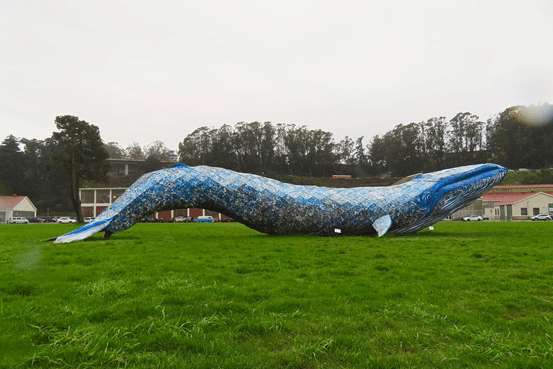
You could also bring attention to the campaign by providing ocean-like experiences for your customers. If your brand is in hospitality for example, decorating a part of your café, bar or hotel to resemble a beach or an underwater cave could be a fun and novel way to draw customers in, and get them thinking.
Film screenings, music concerts, festivals or online events such as competitions are some other great examples of what you could host to get involved – any event that will get people engaged, learning about the importance of our oceans and having fun is perfect!
Marketing takeaway
Protecting the oceans is essential to protecting life as we know it. Countless species, ecosystems and resources depend on the health of marine environments, and our current consumption, waste and business practices need to change if we are to sustain our oceans.
Brands, by all means, get involved in a one-off event and really push the campaign on and around World Oceans Day to show your customers that you care, and get them thinking. But businesses can have an even bigger impact and enhance their customers’ perception of their brand long-term by committing to smaller actions throughout the year. Regular donations, long-term commitments, and using sustainable materials for your products will go a long way. Moreover, communicating these commitments (big or small) will not only help to continue raising awareness about our oceans, but it will also show your customers that by supporting you, they are also supporting the conservation of the lungs of our planet.
Want more? To understand more about the discussion around plastic and plastic-themed awareness days, check out our article here. For plenty of other national days that your brand could get involved with, click here.
Written by Jodie Sheehan